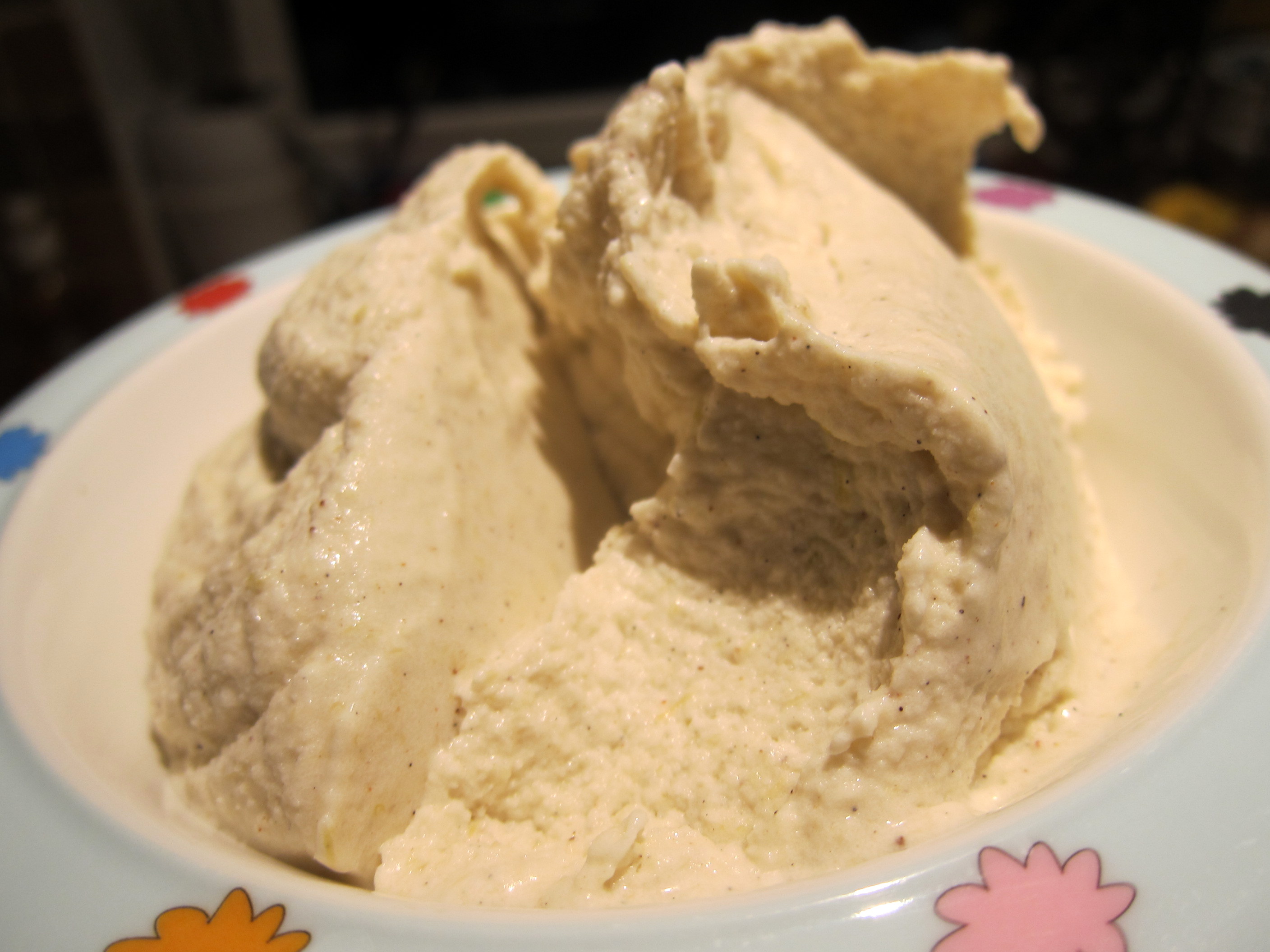
Chile Chocolate ice cream
Already the ancient Aztecs and the Mayans knew that Chile peppers and chocolate have positive and reinvigorating qualities. Greatly inspired by my dear friend Mats, dedicated pepper specialist and true enthusiast, I decided to have a go at this forceful combination in frozen form.
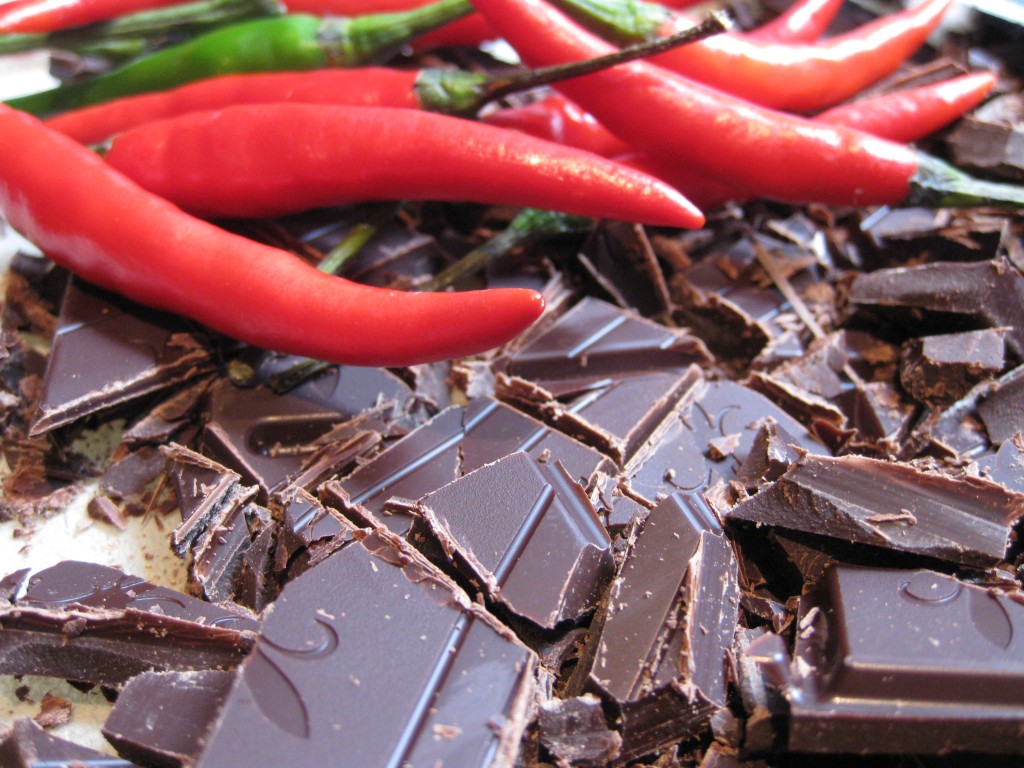
Chile pepper chocolate ice cream (yields a bit less than 1 litre)
Ingredients:
300 ml (about 1.3 cups) cream
300 ml (about 1.3 cups) milk
50 ml (about 3.5 tablespoons) sugar
70 ml (0.3 cup) honey
2 sheets of gelatine
200 grams dark, bittersweet chocolate (70-85 % cacao), finely chopped
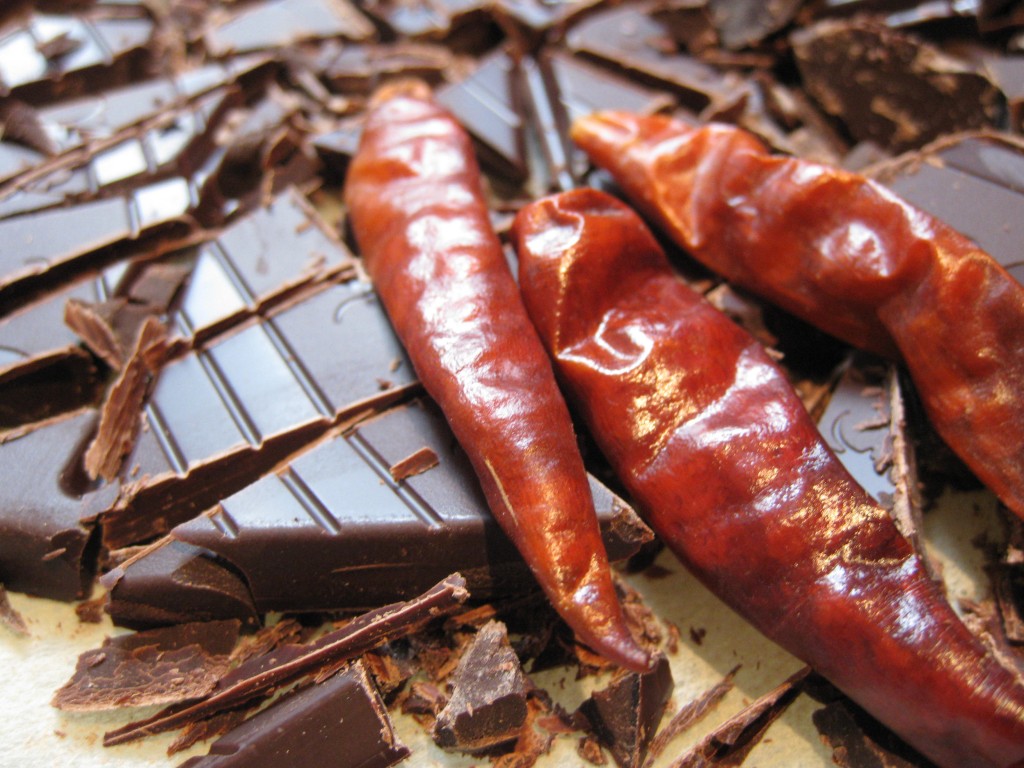
About 1 teaspoon dried, chopped Chile peppers [depending on your tolerance for spicy heat, remove or maintain the seeds. If you include the seeds, the ice cream will be significantly hotter].
When trying out the recipe, I used dried Chile de árbol (Capsicum Annuum), with a spicy heat index of 50,000-65,000 Scovilles: fairly hot, in other words.
Preparations:
Soak the gelatine sheets in plenty of cold water for at least 10 minutes.
Mix together the milk, the sugar, the honey and the chopped dried pepper fruits (with, or without the seeds, according to your heat-tolerance). Bring to a boil. Remove from the heat.
Pick up the gelatine sheets from the water, do not attempt to wipe them off – just add them straight into the hot mixture. Stir until the gelatine has melted.
Add the finely chopped chocolate. Blend until the ice cream base is smooth and even, and all of the chocolate has melted.
Chill quickly and transfer to a refrigerator. After at least a few hours, pass the cold ice cream base through a sieve (to remove the Chile pepper pieces) and pour it into the ice cream machine. Churn according to instructions. If you have no ice cream machine, use your freezer to still-freeze the ice cream.
A note on the level of spicy heat:
Using dried peppers instead of fresh ones will increase the heat level; something to keep in mind. Still, unless you include the seeds (or choose to use an even hotter type of pepper than I did, of course), this recipe is likely to prove generally acceptable (=edible) even to those not particularly into Chiles. While the pepper does add a distinct, spicy sting and an invigorating extra dimension and after-taste to the general, rich chocolate flavour, it does not come across as over-powering or too painful.
If you are a hardened Chile-head and worry about a too tame experience, you might want to consider not only adding the seeds, but also trying the recipe with even more challenging types of pepper.




I have never used gelatin sheets. I see they come in different “blooms”. What bloom are the two sheets used for this recipe?
Would it be disastrous to use gelatin powder instead?
Hi Carla,
First, and just to get that out of the way for the benefit of others who might read this, “blooming” refers to the process of softening the gelatin (like, soaking it in water) before using it.
Your own question, however, refers to so-called Bloom strength: a grading developed by a certain Oscar Bloom (hence the name) of the firmness of gelatin, where a higher number indicates a stiffer, stronger and quicker to gel (and typically also more expensive) product. For smaller quantities, like for a batch of ice cream, Bloom strength should not matter that much. Personally, I tend to go with what I find in the store (which happens to be the gold grade, i e 200 Bloom) but lower grades like “silver” (160 Bloom) should also work nicely.
You can certainly use gelatin powder instead of sheets – just make sure the granules dissolve completely. As for the substituion ratios, there are various views: 1 tablespoon of powdered gelatin to 3 sheets is one rule of thumb, although you might want to add yet another half a sheet or so to that equation. Best of luck!